Vaccination • Awareness • Early Detection • Early Treatment
Diphtheria is a serious bacterial infection that primarily affects the upper respiratory tract and can also affect the skin. The bacteria can produce a toxin that may damage the heart, nerves and other organs.
Diphtheria is vaccine-preventable, but protection requires appropriate vaccination and, where recommended, booster doses. People who are unvaccinated or incompletely vaccinated are at greater risk.
Diphtheria in Nigeria
Diphtheria remains an important public-health concern in Nigeria.
WHO’s 2026 regional rapid risk assessment continues to identify diphtheria as a significant public-health concern in Africa and emphasises the importance of preparedness, prevention and effective outbreak control.
The continuing risk makes community awareness and vaccination particularly important.
What Causes Diphtheria?
Diphtheria is caused by toxin-producing bacteria known as Corynebacterium diphtheriae.
It can spread from an infected person through respiratory droplets, such as those produced when coughing or sneezing, and through close contact with infected respiratory secretions or certain skin lesions.
What Are the Symptoms?
Symptoms may appear a few days after infection.
Common warning signs include:
- Sore throat
- Fever
- Weakness or tiredness
- Swollen glands in the neck
- Difficulty swallowing
- Hoarseness
- Difficulty breathing
- Swelling of the neck
- A thick grey or whitish membrane in the throat
A membrane that interferes with breathing or swallowing can become life-threatening and requires urgent medical attention.
Why Is Diphtheria Dangerous?
Diphtheria can produce a toxin that damages tissues and organs.
Serious complications can include:
- Heart damage
- Myocarditis
- Nerve damage
- Paralysis
- Kidney complications
- Airway obstruction
- Respiratory failure
- Death
WHO notes that, without proper treatment, diphtheria can be fatal in a substantial proportion of unvaccinated cases.
Prevention: Vaccination Is Key
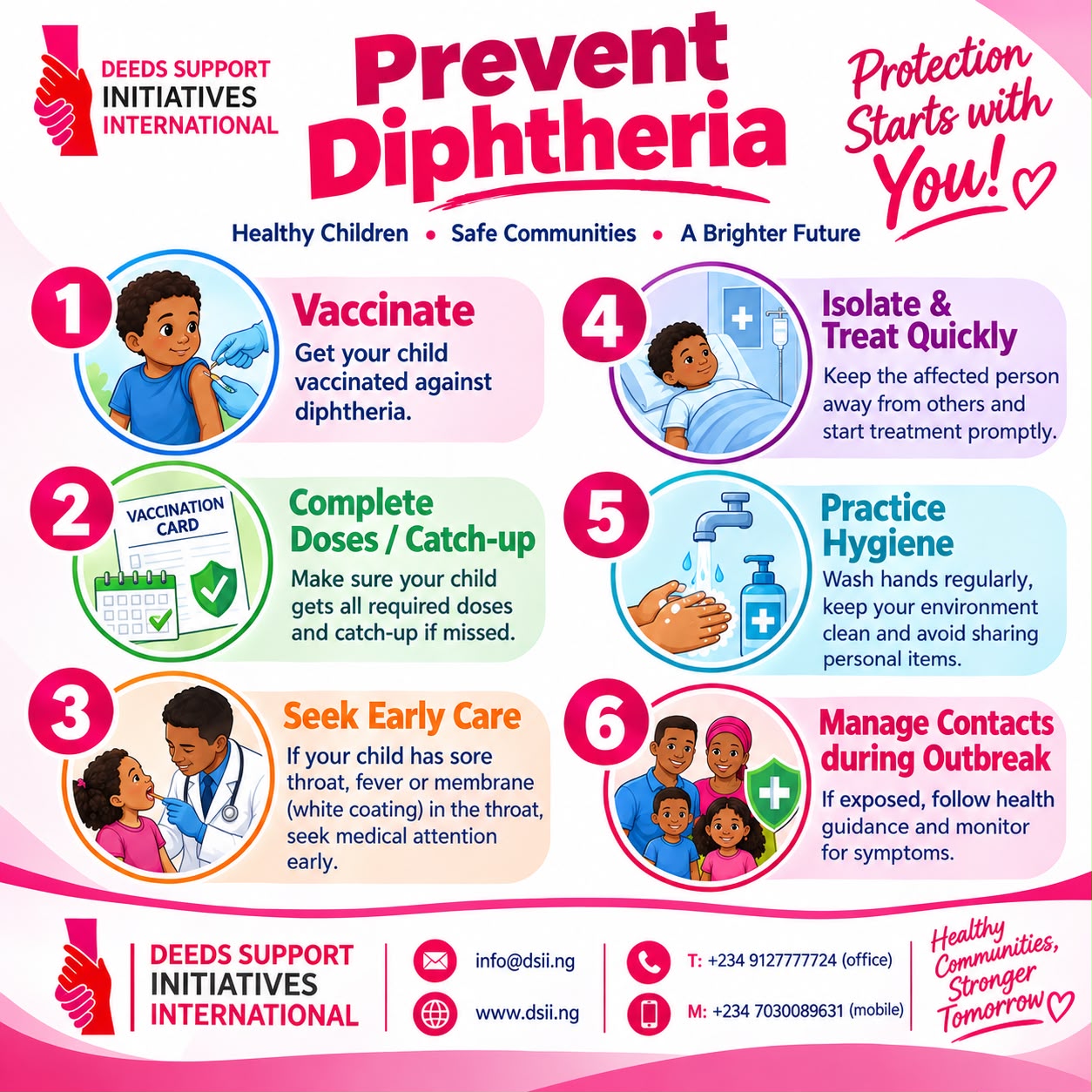
Vaccination is the most effective way to prevent diphtheria.
Parents and caregivers should ensure that children receive diphtheria-containing vaccines according to Nigeria’s recommended immunisation schedule.
Vaccination does not only protect an individual child—it also contributes to reducing transmission and protecting vulnerable members of the community.
WHO emphasises that multiple doses and booster doses are required to establish and maintain protection against diphtheria.
What Should You Do If You Suspect Diphtheria?
If you or your child develops symptoms suggestive of diphtheria, particularly difficulty breathing, difficulty swallowing or a greyish membrane in the throat, seek medical attention immediately.
Remember:
DO NOT:
- Attempt to remove a throat membrane yourself.
- Delay medical attention.
- Rely solely on home remedies.
- Give antibiotics without appropriate medical advice.
DO:
- Seek medical care immediately.
- Follow the healthcare professional’s instructions.
- Avoid close contact with others where advised.
- Inform healthcare workers about possible exposure.
- Follow recommendations concerning testing, treatment and infection prevention.
Treatment can include diphtheria antitoxin and antibiotics, and early treatment is important.
Protecting Our Communities
Preventing diphtheria requires collective action.
Parents and caregivers
Ensure children receive recommended vaccinations.
Schools
Promote health education and encourage parents to maintain children’s immunisation.
Community leaders
Support accurate health information and encourage families to seek medical care promptly.
Healthcare workers
Maintain vigilance for suspected cases and follow appropriate public-health procedures.
Community organisations
Support awareness campaigns and help communities understand the importance of vaccination and early treatment.
DSII’S MESSAGE
Diphtheria is preventable. Awareness saves lives. Vaccination protects communities.
Deeds Support Initiative International (DSII) is committed to promoting health education and empowering communities with reliable information that can help prevent disease, encourage early healthcare seeking and protect vulnerable populations.
Know the signs. Check vaccination status. Act early. Protect your community.
Sources and Further Reading
- World Health Organization — Diphtheria Fact Sheet
- World Health Organization — Rapid Risk Assessment: Diphtheria, African Region, 20 March 2026
Disclaimer: This article is provided for public health education and awareness. It is not a substitute for professional medical advice, diagnosis or treatment. Anyone with symptoms suggestive of diphtheria should seek urgent medical attention.
Leave a Reply